
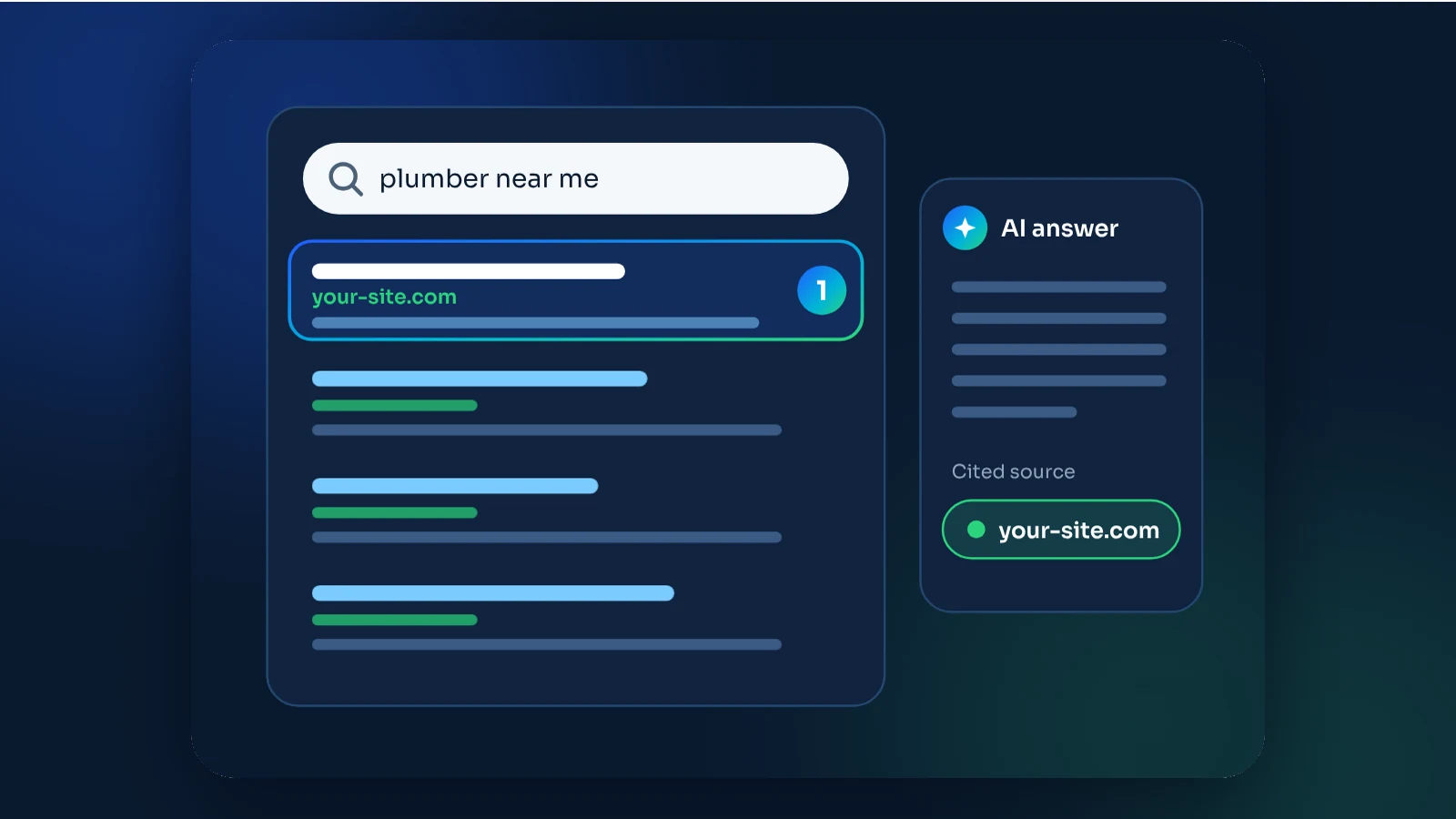
When people look for a tradesperson, they no longer just type a few words into Google. More and more often, they ask ChatGPT, Claude or Perplexity, and read the answer. That answer names two or three businesses, rarely more. For a small business, the challenge is no longer just ranking well: it's being one of those two or three.
It's a topic we work on for our clients' websites. Here is what we've learned, starting with a real-world example.
Klart Concept: using AI to choose where to show up
Klart Concept designs and renovates bathrooms, kitchens and fittings around Argelès-Gazost, in the Hautes-Pyrénées, in the south of France. Its service area covers many towns, and there was no way to highlight all of them equally.
Rather than choosing by gut feeling, we gave AI a real analysis to run: the population of each town in the area, household income levels, then a ranking of the towns where a quote request was most likely to turn into a job. Around twenty towns were selected, and the website's service area page was built around them.
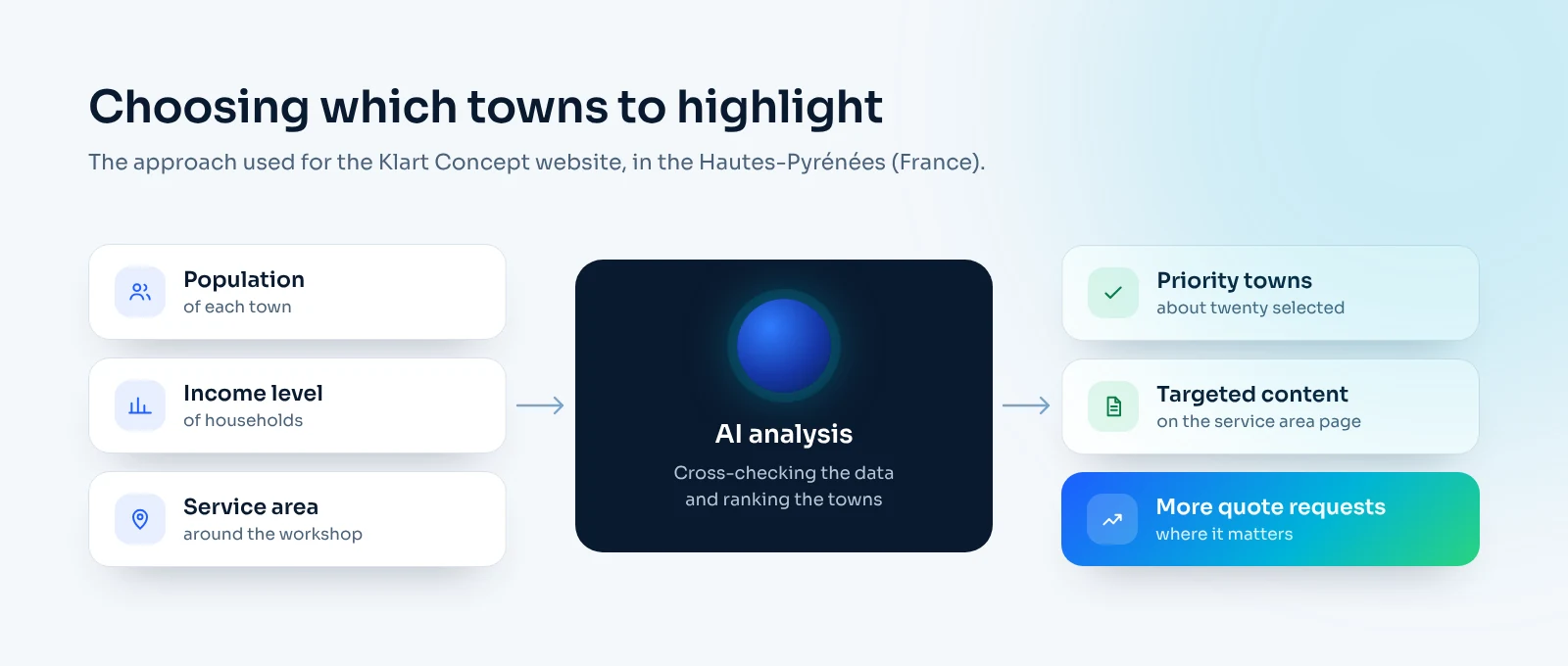
A few years ago, this work would have been sold as a market study. Today, it's part of building the website. And it's this positioning, far more than the number of pages, that makes the difference: for our clients, a well-positioned, well-ranked website has translated into more visits and more quote requests.
Let in the crawlers that cite you
An AI doesn't guess what's on your website: it sends crawlers to read it. They don't all do the same job, and that's the first thing to understand.
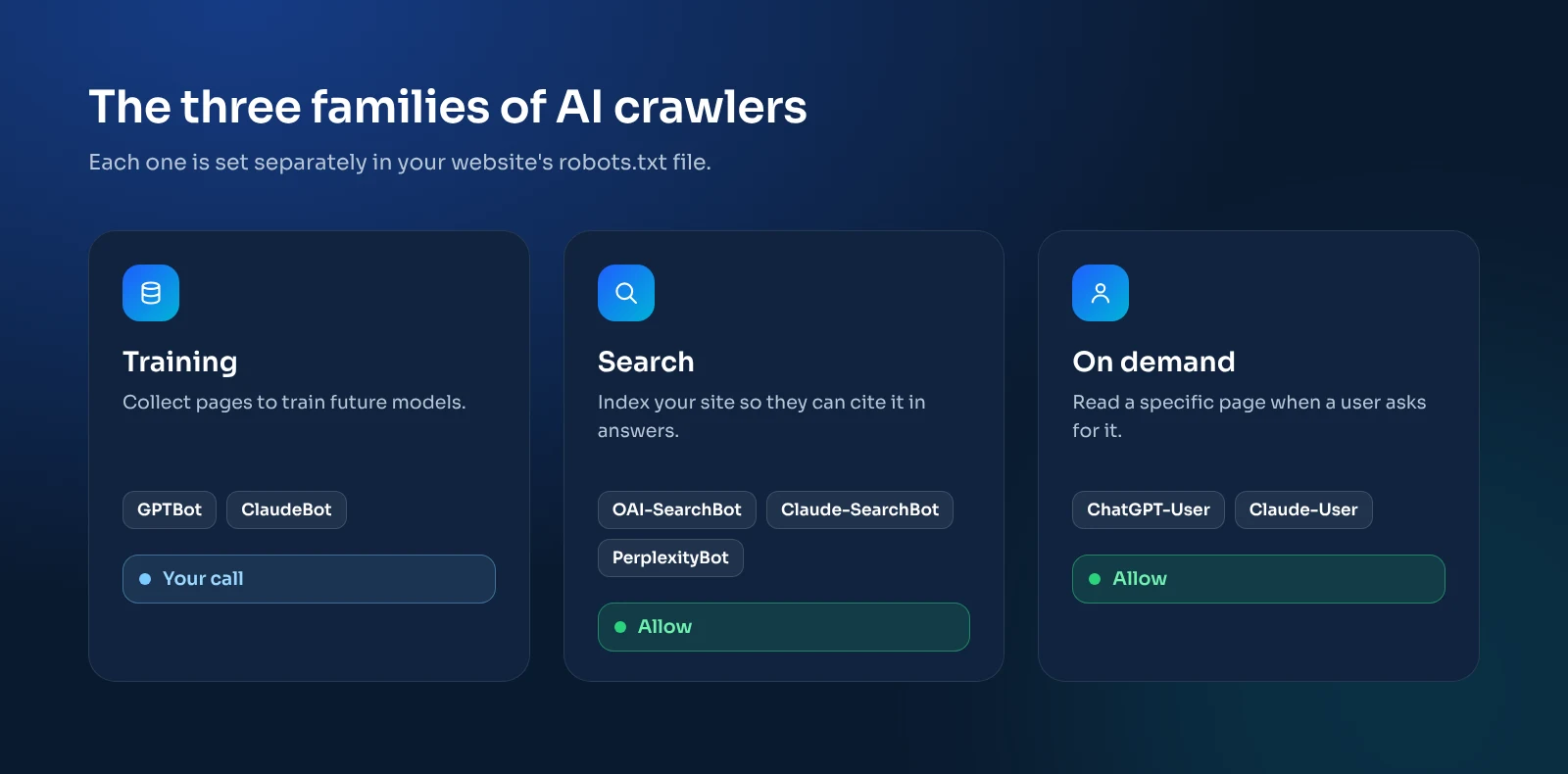
Training crawlers collect pages for future models. Search crawlers index your site so they can cite it. "On-demand" crawlers read a page when a user asks their assistant to. Each one is set separately in the robots.txt file, which lets you, for example, refuse training while staying visible in answers:
User-agent: GPTBot
Disallow: /

User-agent: OAI-SearchBot
Allow: /

User-agent: Claude-SearchBot
Allow: /

User-agent: PerplexityBot
Allow: /
Our advice: unless your content is truly sensitive, never block search crawlers. For training, the decision is yours, and blocking it won't make you disappear from answers. In fact, the most common trap isn't a deliberate choice: it's an overly strict security setting at your host, or a plugin that blocks anything that looks like a bot.
Write to be understood, by humans first
An AI cites a page when it finds a clear answer there. Who are you, where do you work, what exactly do you do, how long does it take? If this information is buried in a long welcome text, it will look for it elsewhere.
In practice, that means one page per service rather than a catch-all page, sentences that answer from their very first word, and precise facts: the towns you serve, lead times, years of experience. An FAQ built on your customers' real questions often does more for your visibility than a long article.
On top of that text, structured data (the Schema.org vocabulary) describes your business in a format machines read without hesitation: name, address, opening hours, service area, services. Your visitors don't see it, but it saves the AI from having to interpret.
The technical foundations
For a local business, the Google Business Profile remains a reference: address, opening hours, photos and reviews are picked up by Google and, often, by assistants. It must say exactly the same thing as your website.
Several AI crawlers then read the page as the server sends it, running little or no JavaScript. A site whose text only appears once a script has loaded can look empty to them. That's why the websites we build send complete content from the server's very first response.
Finally, the llms.txt file offers AIs a plain-text summary of your website. It isn't a standard yet and nothing guarantees it's read everywhere, but it costs almost nothing: we add it to our websites, and this one has one.
None of this is magic. Being cited by an AI rests on the same foundations as being chosen by a customer: knowing where they are, and answering them clearly. That's what we apply to every website, as part of our SEO and AI visibility capability.
Share this article